Visit
What to see in Oghuz and its foothills.
Where to go
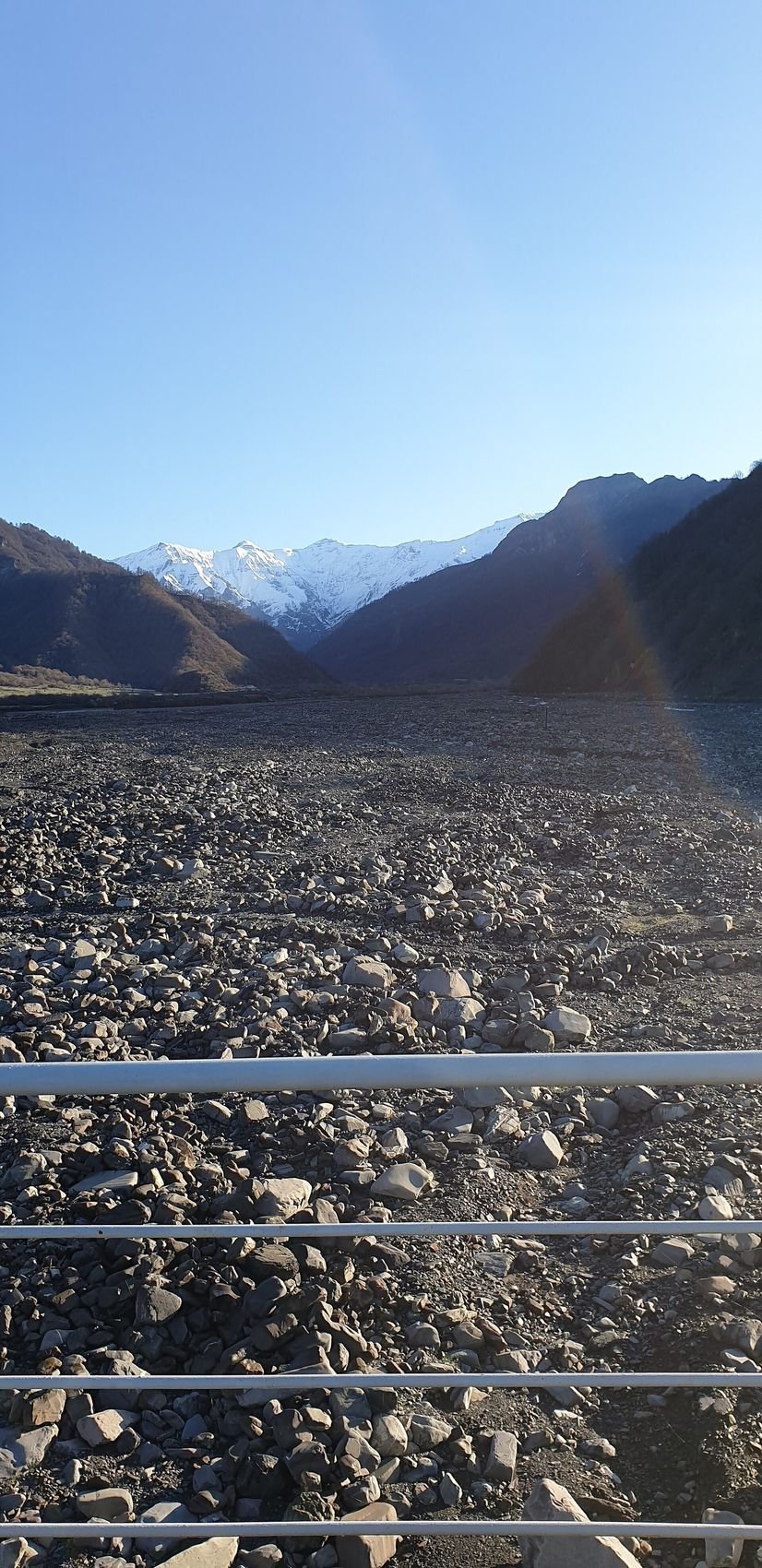
Oghuz is small, but around it lie both nature and memory. Here you can see monuments of the multi-ethnic past, the ancient Albanian church, old bridges, and in the mountains waterfalls and springs. It is a place where history and nature go side by side.
The church, the bridge and the mountains
Among the main sites of Oghuz are the Albanian church, recalling the Christian past of the Udis and Caucasian Albania, the old Filfilli bridge over the Qalachay river, mountain waterfalls and the Qaynama spring. And also the old quarters of the town, keeping the memory of its former diversity.
The essentials, briefly
In northwestern Azerbaijan, on the southern slopes of the Greater Caucasus, in the Shaki-Zaqatala region. To the north the district borders Dagestan (Russia).
The town has borne its modern name, Oghuz, since February 1991; its history is linked to the region's multi-ethnic past.
Above all for its multi-ethnicity: it was one of the main centres of the Mountain Jews of Azerbaijan and of the Udis — descendants of Caucasian Albania.
The Mountain Jews (Juhuro) are a Jewish community that lived in Oghuz for centuries, with their own quarter, synagogue and the Juhuri language. Most left for Israel.
The Udis are a small Christian people, descendants of Caucasian Albania. Oghuz was one of their centres; today the main Udi village is Nij.
The forests and mountains of the Greater Caucasus, the Khalkhal waterfall, the Qaynama spring, the Alijanchay and Qalachay rivers, as well as the Albanian church and old bridges.
Coming to Oghuz, you hear the town's memory answer in the sound of the mountains.